ServicesVehicle Restraints
Vehicle Restraints in Scranton
We repair, adjust and install vehicle restraints that hold a trailer at the dock until the last pallet is off. You get a restraint that engages cleanly, lights that tell the truth to driver and dock crew, and one small crew who sees the work through.
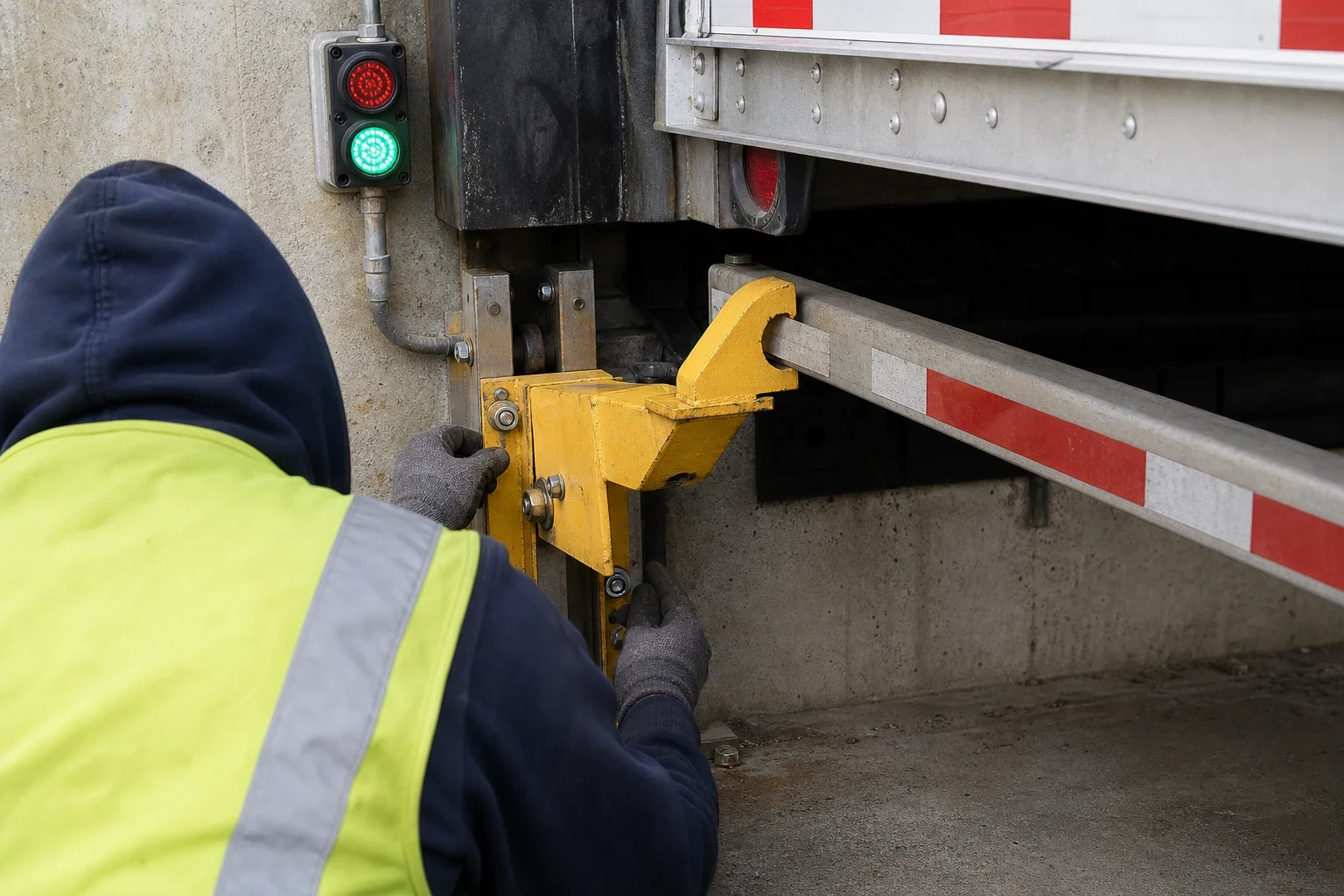
A restraint that holds the trailer, every time
A vehicle restraint keeps a trailer from creeping forward or pulling away while a forklift is crossing the dock leveler. When it works, nobody thinks about it. When the hook misses the bar or the light stays green with nothing locked, your people are working on trust instead of steel.
We service hook-style restraints that catch the trailer's rear impact guard, wheel-based units that block a tire, and the signal lights and interlocks tied to them. The same people who assess your dock are the ones who return to do the work, so nothing gets lost between a first visit and the repair.
Most calls fall into two groups: a restraint that has started to act up, or a dock that never had one and now needs it. We handle both, and we'll tell you plainly which path makes sense.
The restraint work we handle
- Hook, carriage and track
- We check the hook, carriage and track for bent steel, flattened rollers and spots where travel binds. If the carriage hangs up partway, it cannot reach a tall trailer bar, so we restore smooth movement top to bottom.
- Powered drive repair
- Hydraulic and electric restraints run on a motor, pump or actuator. We track down leaks, weak motors and bad limit switches, and swap the failed part instead of the whole restraint when everything else is in good shape.
- Lights and sensors
- The inside and outside lights are only useful when they reflect the real position of the hook. We test every bulb and sensor so red tells both the driver and the forklift operator to stop.
- Interlocks with levelers and doors
- Plenty of facilities want the leveler or overhead door held locked until the restraint is engaged. We wire, set and test those interlocks so each step happens in the proper order.
- Installing new restraints
- Where a dock has no restraint, we study the trailers you receive and the state of the dock face before suggesting a type. Units go onto solid concrete or a proper mounting plate, never onto broken edges.
Signs your vehicle restraint needs attention
The hook misses the bar
If drivers or dock staff report the hook riding over or under the rear impact guard, the carriage may be worn or out of adjustment. It can also mean the restraint was never matched well to your trailers.
Lights that disagree with reality
A green light outside with nothing engaged, or a red light that never clears, is a sensor or wiring fault. Crews start ignoring the lights, which defeats their purpose.
Slow or noisy travel
Grinding, chattering or hesitation usually points to dirty tracks, dry rollers or a tired motor. Caught early, this is often a modest repair.
Winter trouble
Packed snow, ice and road salt build up in the track through a long winter and corrode moving parts. A restraint that freezes in place each cold morning needs cleaning and a closer look at the steel.
Workarounds on the dock
When staff override the restraint or reach for chocks because the unit is unreliable, it is time to fix it properly.
What moves the cost of restraint work
Pricing depends on what we find, so we quote after seeing the dock. A worn roller and a burned-out bulb is a very different job from a restraint that needs replacing. Your estimate lists each part and the labor, so there are no surprises on the invoice.
Type of restraint
Manual, hydraulic, electric and wheel-based units each have their own parts and labor time.
Repair or replacement
If the carriage and track are sound, targeted repair is usually the better value. Heavy corrosion or a bent track can tip the answer toward a new unit, and we'll explain why.
Condition of the dock face
Cracked or spalled concrete may need patching or a mounting plate before a restraint can be anchored securely.
Electrical and interlock work
Running new wiring, adding signal lights or tying the restraint into a leveler or door control adds time.
Number of doors
Servicing several restraints in one visit spreads setup time across the doors.
How a restraint job runs
- 1
A conversation by phone
You tell us what the restraint is doing and how many doors are involved. We ask about the make if you know it and the trailers you usually receive.
- 2
On-site assessment
We cycle the restraint, check the hook, track, drive, lights and interlocks, and look at the concrete it mounts to. You get photos of what we found and a written, line-item estimate.
- 3
Work scheduled around your shifts
We plan the repair for a slow window so the affected door is out of service as briefly as possible. Neighboring doors stay open where it is safe.
- 4
Testing and handover
We test with a trailer at the door when one is available, confirm the light sequence, and show your dock lead what changed. We clean up the work area before we leave.
Common restraint questions
Will a hook restraint catch every trailer that backs into our dock?
Most trailers carry a rear impact guard the hook can grab. Some show up with that bar bent, missing or set at an odd spot, or with a lift gate blocking it. If your fleet is mixed, a wheel-based restraint may be the better fit. We look at the trailers you actually receive before recommending one.
We have a leveler at the door. Is there still room for a restraint?
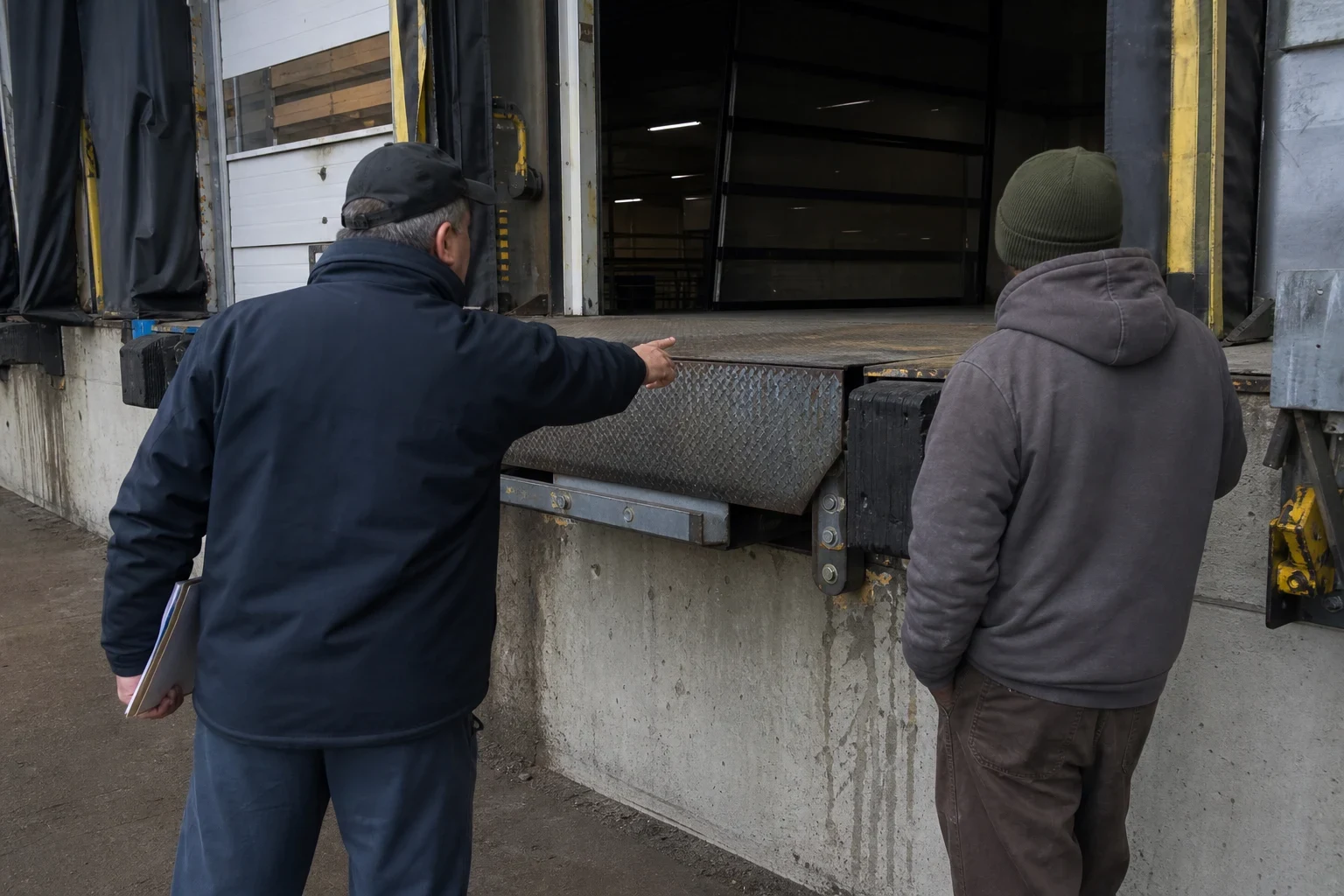
Usually, yes. We check the dock face, the bumpers and the space under the leveler lip, then mount the restraint with a control of its own. If you like, we can link it to the leveler with an interlock during the same job.
Do we still need wheel chocks once a restraint is installed?
That decision belongs to your safety program. Some facilities keep chocks as a backup or for trailers the restraint cannot catch. We make sure the restraint works properly, so a failed unit is never what forces the choice.
Can our other doors keep running while you work?
In most cases. We close only the door we are working on, and we set the timing with your receiving lead.
How often should a restraint be inspected?
A restraint works hard and sits outside in the weather, so regular checks pay off. Many customers include restraints in their loading dock preventative maintenance with their dock levelers and overhead doors.
Get your restraints working the way they should
Tell us what you are seeing at the dock and we'll set up a visit with the crew who will handle the work from start to finish.