ServicesEquipment Installation
Loading Dock Equipment Installation in Scranton
We install dock levelers, vehicle restraints, seals, shelters, bumpers and doors at working facilities. The same small crew measures your dock, sets the equipment, tests every cycle and shows your people how it runs, so nothing gets lost between handoffs.
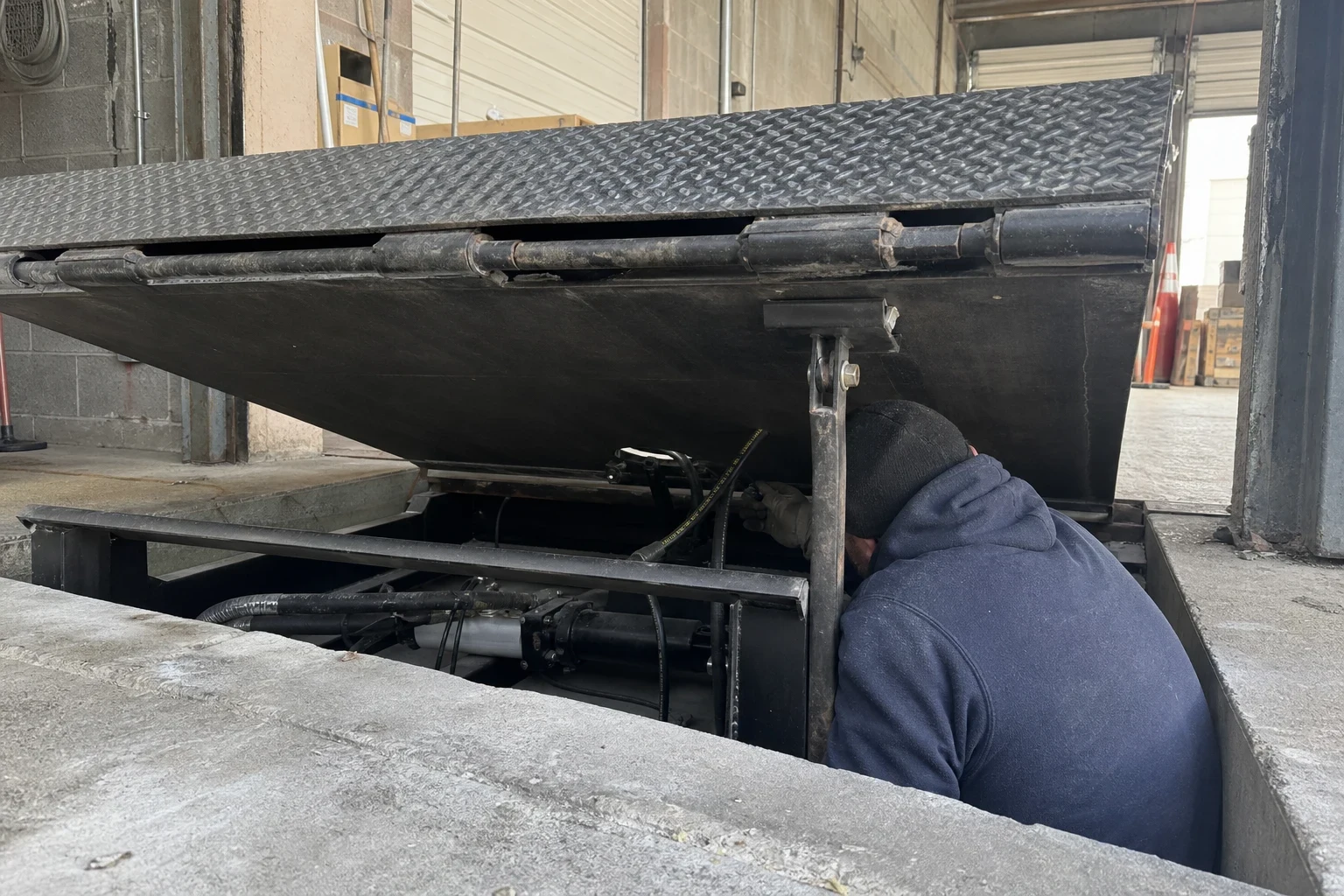
New dock equipment, set carefully the first time
A loading dock only works as well as its installation. A leveler set a quarter inch out of square will drag its lip, a restraint mounted at the wrong height will miss the trailer's rear impact guard, and a seal with the wrong projection will leave daylight around every truck. Most early failures we see on new equipment trace back to how it went in, not to the equipment itself.
We keep installations with one small crew from start to finish. The person who measures your pit is on site the day the leveler goes in, and is the person who runs the final test with your dock lead. That continuity means fewer surprises, fewer return trips and a dock your operators trust from the first shift.
We install equipment bought through our Loading Dock Equipment Sales service and equipment you have already sourced, as long as it suits the opening and the loads it will carry.
What an installation covers
- Dock levelers
- Pit-style levelers driven by hydraulics, an air bag or springs, and compact edge-of-dock plates for doors that see lighter, occasional traffic. Before anything is set, we confirm pit depth, curb angles and drainage. The unit is then shimmed, anchored and welded so the deck sits flush with your dock floor.
- Vehicle restraints
- Wheel-based and rear-impact-guard restraints, mounted to match the trailers you actually receive. We wire the inside and outside light signals so drivers and dock staff see the same status.
- Seals, shelters and bumpers
- Foam seals and fabric shelters sized to your door and trailer mix, with bumpers set to the right projection. In a northeastern Pennsylvania winter, a well-fitted seal keeps heat in and snow off the dock floor.
- Doors and interlocks
- Overhead doors, high speed doors and rolling grilles installed alongside the dock equipment, with optional interlocks so the door, leveler and restraint work in the correct order.
- Removal of old equipment
- We disconnect, remove and haul away the units being replaced, and clean up the pit or wall so the new equipment sits on sound material.
Times when new equipment makes sense
The same leveler keeps needing work
A cylinder, then a lip hinge, then a deck plate, all in a short span, usually means a new unit will cost less in the long run than more repairs. We will be straight with you about which way to go.
Different trailers are backing in
Lower beds, air-ride trailers or heavier freight can push a leveler past its working range or rated capacity. Steep ramps slow forklifts and take a toll on both machines and drivers.
Trailers creeping or leaving early
Without a vehicle restraint, a dock depends on wheel chocks and drivers paying attention. A restraint is among the most direct safety improvements a building can add.
Cold air and gaps at the trailer
Seals that are crushed or ripped let in cold, rain and pests. If the backing frame is damaged too, new seals or a shelter fix the problem better than patching.
A new building or more doors
Expansions and fit-outs go best when the equipment is chosen and placed alongside the concrete and steel work, ideally before any pit is poured.
What shapes the price
Every dock is different, so we price after we have seen it. The equipment itself is only part of the cost. Pit condition, power and how much of the dock must stay in service all move the number, and we explain each line before work begins.
Equipment type and capacity
A hydraulic pit leveler with a long deck and high capacity costs more than an edge-of-dock unit. Restraint style and door type matter in the same way.
Pit and concrete condition
Cracked curbs, crumbling pit walls or poor drainage need repair before a new leveler goes in. We show you photos of what we find.
Electrical and controls
Powered levelers, restraints, lights and interlocks need power at the right place. Existing circuits that can be reused keep costs down.
Number of positions and scheduling
Several positions done in sequence are more efficient per door. Work arranged around your shifts or on weekends can affect labor.
How the work runs
- 1
Site survey and measurements
We visit the facility, measure each opening, pit and approach, and note trailer heights, traffic and power. We ask how your dock runs day to day so the schedule fits your receiving.
- 2
Written plan and estimate
You get a line-item estimate covering equipment, prep, removal and any concrete or electrical coordination. We flag permit needs and anything that depends on what we find under the old unit.
- 3
Prep and staging
We schedule delivery and work position by position so the rest of your doors stay open. Work areas are barricaded and kept clear of forklift lanes.
- 4
Setting and testing
The crew sets, levels, anchors and wires each unit, then cycles it through its full range with a loaded forklift where possible. We adjust until the lip lands cleanly and the controls respond as they should.
- 5
Walkthrough and handoff
We show your operators the controls, the daily checks and the warning signs to watch for, and we leave the area swept and clear.
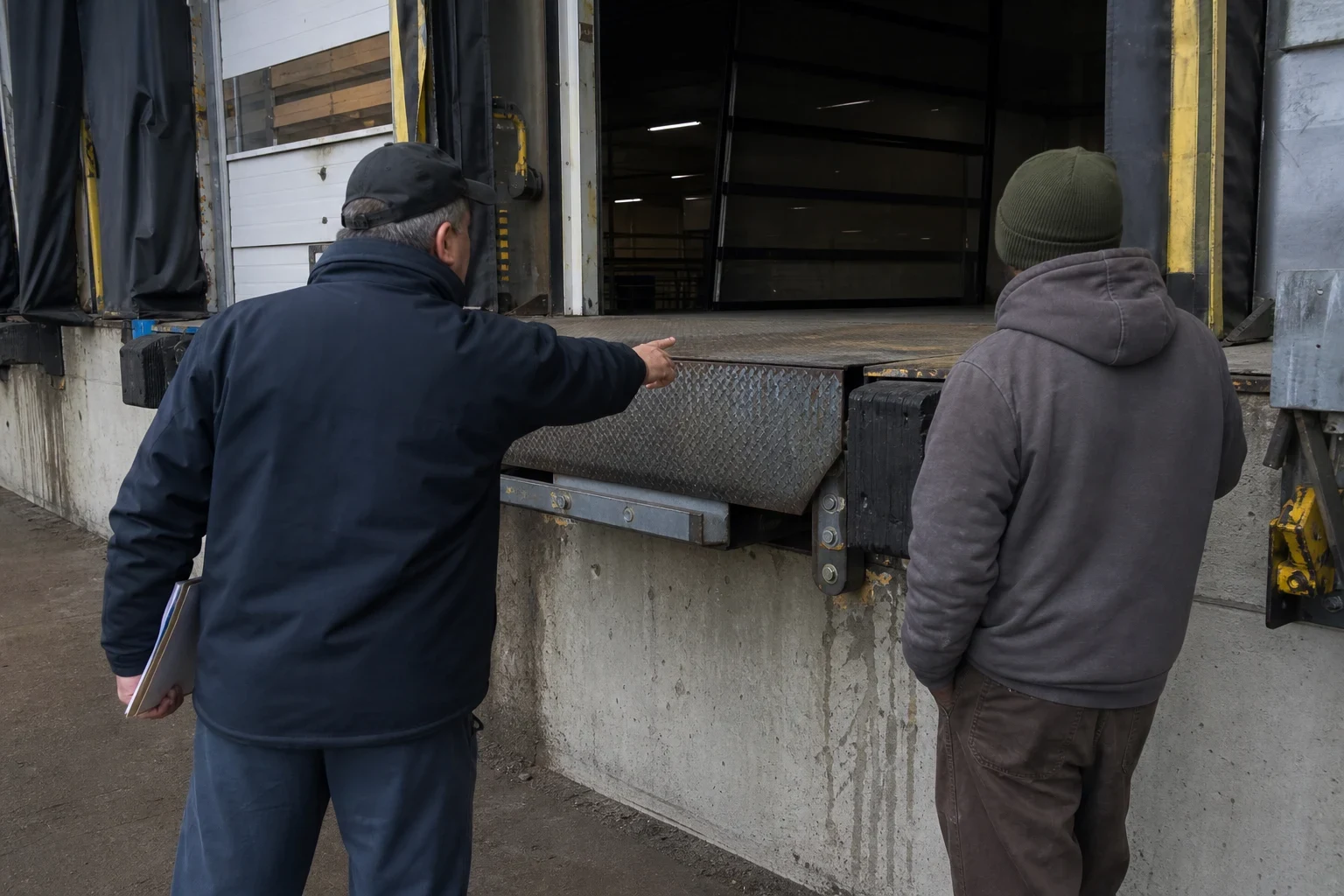
Installation questions
Can we keep receiving trucks while you work?
In most cases, yes. We take one or two positions out of service at a time and keep the work area fenced off. If your dock has only one or two doors, we plan the work around your lightest receiving days.
How long does a leveler installation take?
A straight swap into a sound pit usually goes much faster than a job that needs concrete repair or new electrical. We give you a realistic schedule after the site survey, and we tell you right away if something under the old unit changes it.
Will you install equipment we already bought?
We can, provided it fits the opening, the pit and the loads you handle. We review the specifications before scheduling so there are no surprises on install day.
Does the work need a permit?
Some projects do, especially those with new pits, structural changes or new electrical circuits. We check the requirements with the local municipality, whether in Scranton, Dunmore or Pittston, and let you know what applies.
Who looks after the equipment once it is in?
The same crew that installed it can handle upkeep through our Loading Dock Preventative Maintenance service. They already know your dock, which makes inspections quicker and more thorough.
Plan your next dock installation
Tell us what you are replacing or adding, and we will arrange a site visit. You will deal with the same small crew from the first measurement to the final test.