ServicesPreventative Maintenance
Loading Dock Preventative Maintenance in Scranton
We inspect, adjust and lubricate your dock levelers, overhead doors and vehicle restraints on a schedule that fits your shifts. The same small crew returns each visit, so the person checking your equipment already knows its history and what has changed since last time.
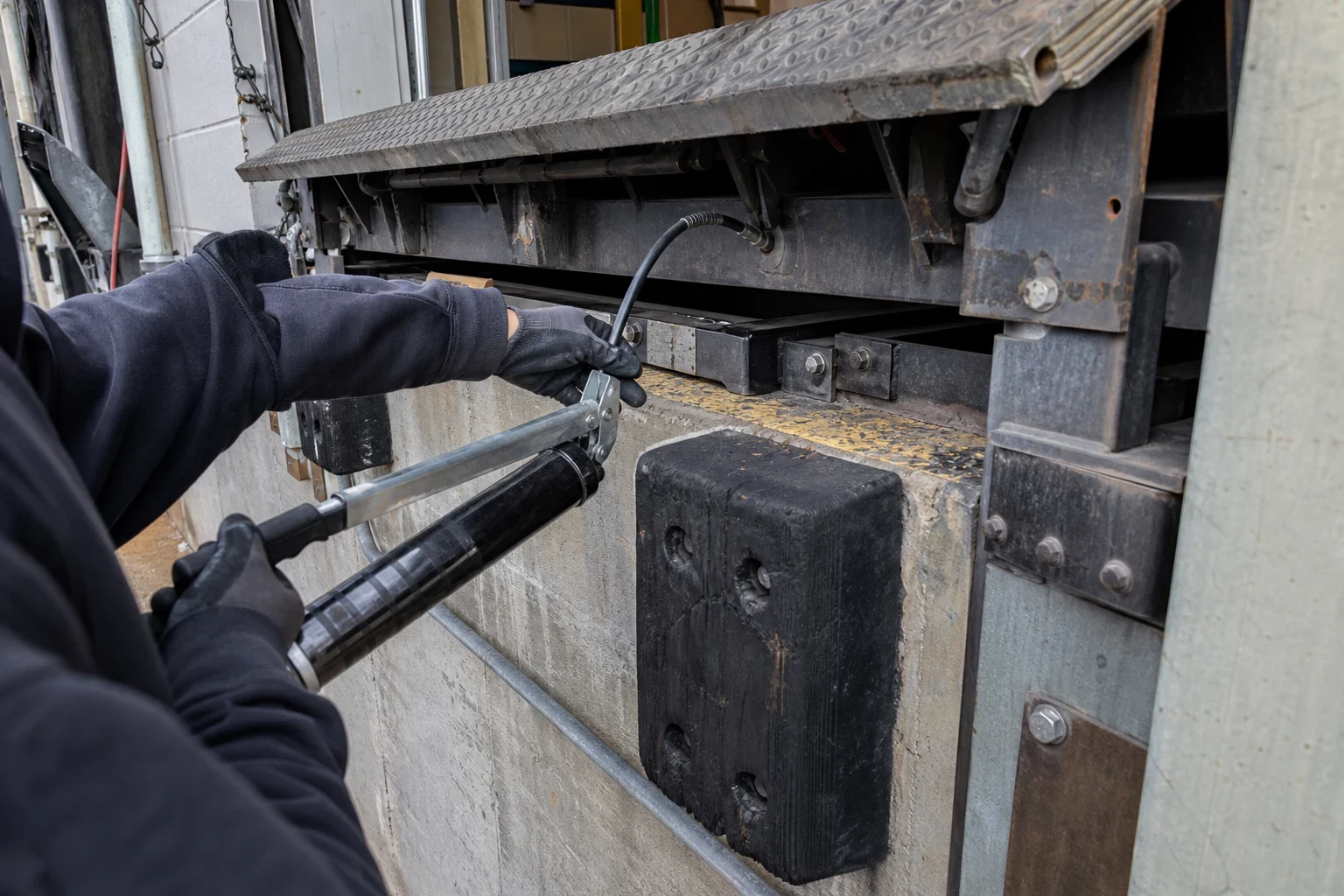
Small fixes on a schedule, not a stalled dock on a busy day
Dock equipment rarely fails all at once. A hydraulic hose weeps for weeks before it lets go. A torsion spring loses tension slowly until the overhead door will not hold open. A restraint hook drifts out of adjustment until a trailer creeps during loading. Preventative maintenance catches these changes while they are still a part and an hour of labor, rather than a dead position and a line of trucks.
We keep our crew small on purpose. The technician who walks your dock on the first visit is the one who comes back on the next, with notes on every position. That continuity is what makes a maintenance program useful: someone who remembers that door three was slow last spring notices when it gets slower.
Scranton winters add their own wear. Road salt tracked in on trailer tires, freeze-thaw cycles at the dock pit and cold hydraulic fluid all shorten the life of seals and moving parts, which is why many facilities schedule a visit before the cold sets in.
What a maintenance visit covers
Dock leveler inspection and service
We check hydraulic fluid level and condition, cylinders, hoses and fittings for leaks, and the lip hinge pins and deck hinge for wear. Moving points are cleaned and lubricated, and we cycle each leveler through its full range to confirm it rises, extends and stores cleanly.
Overhead door checks
Springs, cables, drums, rollers and track alignment are inspected and adjusted. We test balance by hand, check bottom seals and weatherstripping, and confirm operators and safety edges reverse as they should.
Vehicle restraint testing
We engage each restraint against a trailer bar or test fixture, check hook travel and holding position, and confirm the inside and outside communication lights match what the restraint is actually doing.
Seals, shelters and bumpers
Torn shelter curtains and crushed dock seals let in cold air and water. Worn or missing bumpers let trailers strike the building and the leveler. We note each one, measure what needs replacing and photograph the condition.
High speed doors and rolling grilles
Where your facility has them, we check sensors, breakaway and reset functions, curtain or slat condition and the drive. Grilles get the same attention to guides, locks and counterbalance.
A written report with photos
After each visit you receive a position-by-position report: what we serviced, what is wearing and what we recommend now versus what can wait. You decide what gets done and when.
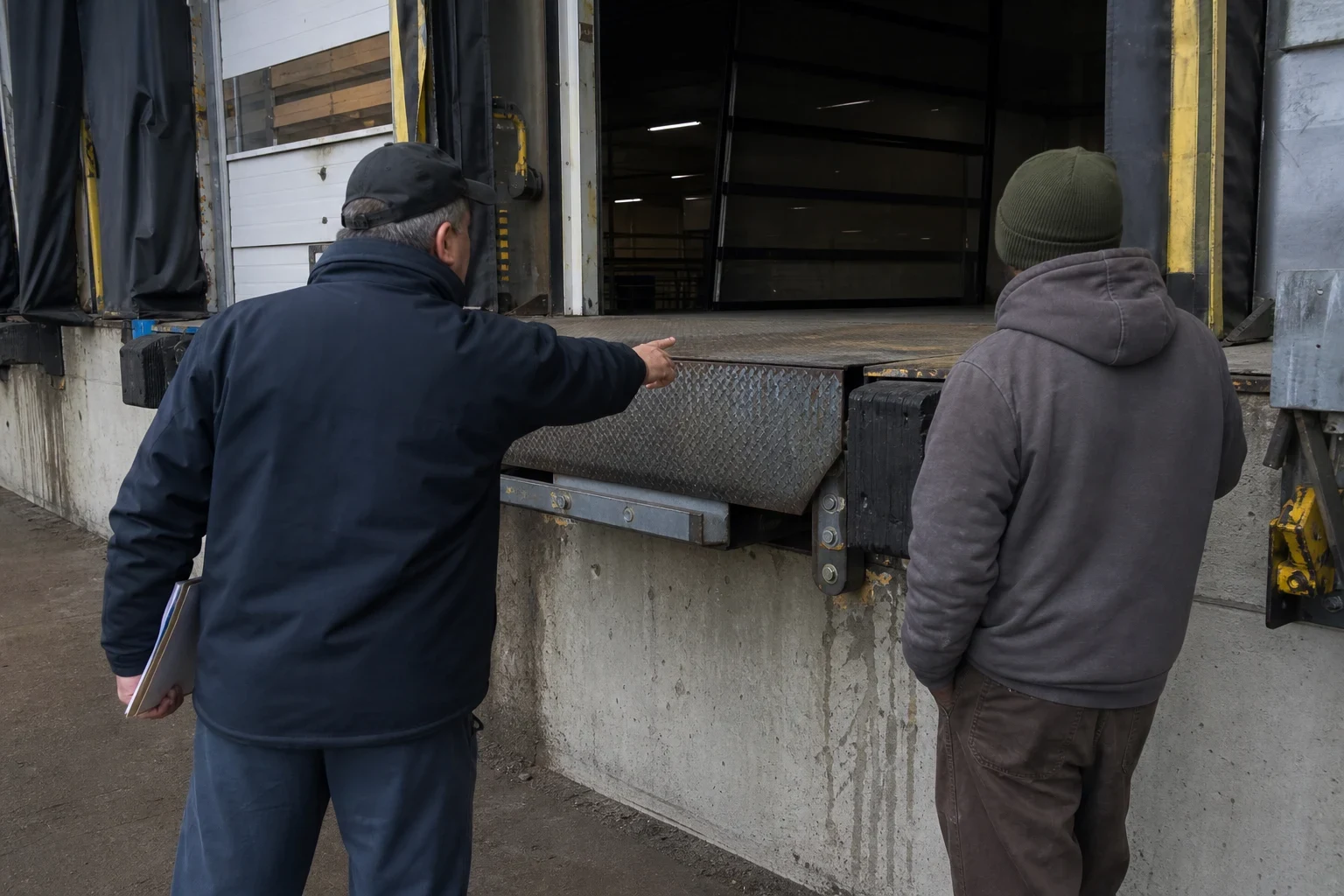
Signs your dock is due for a maintenance program
- Levelers that rise slowly or unevenly
- Sluggish lift, a lip that hesitates or a deck that settles under load usually points to low fluid, a worn pump or a leaking cylinder. Caught early, these are routine repairs.
- Oil spots in the pit
- Fresh hydraulic fluid under a leveler means a hose, fitting or seal is failing. Left alone, it can end with a deck that will not hold its position.
- Doors that bang, drift or stall
- An overhead door that slams down, creeps open or stops partway is out of balance or has a worn spring or cable. These parts carry a lot of stored tension and should be handled by a trained technician.
- Restraint lights that disagree
- If drivers see green while the hook is not engaged, or dock staff override the system to keep moving, the restraint needs attention before it becomes a safety problem.
- A technician only shows up after something quits
- When the sole reason anyone looks at your dock is a failure, the equipment is overdue for regular care. A planned visit takes one position down for a short, known window. An unexpected breakdown takes it down on its own terms, often while you wait on parts.
How we run a preventative maintenance program
- 1
An initial walkthrough
We visit your facility, list every position and the equipment at each one, and note make, type and visible condition. This gives us a baseline and gives you a clear picture of where your dock stands.
- 2
A schedule around your operation
We agree on how often to visit based on your traffic, shifts and equipment age. Visits are planned for slower hours so we can take positions out of service one at a time without holding up receiving.
- 3
The service visit
Our crew works through each position in order: inspect, clean, lubricate, adjust and test. We lock out equipment while we work on it, keep the area marked off and leave the dock swept when we finish.
- 4
Report and follow-up
You get the written report with photos and our recommendations. Any repairs you approve are scheduled with the same technicians, who already know your equipment.
What sets the price of a maintenance plan
Docks differ too much for a flat rate, so we price a plan once we have seen your equipment. The walkthrough gives us what we need, and your written estimate keeps routine service apart from any repairs we turn up.
- How many doors you have
- Twenty doors take far longer than four. Every position has a leveler and a door, often a restraint too, so the number of positions accounts for most of the labor.
- What the equipment is and how old
- Mechanical, hydraulic and air-powered levelers each call for different work. Older units generally take more time and can need parts that are tougher to find.
- How often we come
- A busy distribution center usually does better with more visits than a store taking a few trucks a day. Frequent visits keep repairs small and easier to plan for.
- Wear and replacement parts
- Worn seals, rollers, bumpers, shelter curtains or fluid add parts to the bill. Each is listed on its own line so you can approve it now or put it off.
Preventative maintenance questions
- How many service visits a year does our dock need?
- For many facilities, somewhere between two and four. Traffic and the number of shifts decide it: a leveler working nonstop over three shifts wears out much sooner than one handling a few morning trucks. After the first walkthrough we propose an interval, then adjust it once we see how the equipment holds up from visit to visit.
- Will the dock have to shut down during service?
- It should not. We take one position at a time while the rest stay in use, and we time visits for your quieter receiving hours. Trailers keep loading at the other doors while the crew works on one.
- Can you maintain equipment another company installed?
- Yes. We service levelers, overhead doors and vehicle restraints made by many different manufacturers. When a part has been discontinued, we say so and go over the choices with you, replacement through our loading dock equipment sales service among them.
- What if a visit turns up something that needs fixing?
- We record it in the written report with a photo and a plain description of the problem. Anything urgent for safety we show you right then. No work past the routine service happens until you approve it.
- Do you serve facilities beyond Scranton?
- Yes, across the area, including Dunmore, Old Forge, Moosic, Dickson City and Pittston. Wherever your building is, the same crew comes to each visit.
Start with a walkthrough of your dock
Give us a rough count of your doors and the levelers and restraints in place at each. We will arrange a walkthrough and build a visit plan around your shift pattern.